
#07 if everything is performative, what is not?
Why having a reading habit in Brazil is considerate performative?

You open your Instagram and there it is, a picture of a book. Composition? The book in the middle, right beside a cup of iced matcha, glasses on the other side radiating an incredible and aesthetic energy. This kind of post can be found in every part of the internet nowadays, and what’s wrong with that? Is it bad to read and post? Isn’t it supposed to be inspiring? Not exactly. What’s behind this carefully staged picture?

This social media orchestrated dynamic of reading has become crowd-pleasing in Brazil, especially after the popularization of #Booktok - a huge book club community on Tiktok -, which started outside Brazil in the pandemic scenario. Every day, countless girls broadcast their reading habits in the most aesthetic way, recommending titles, followed by a narrative of intellectual improvement.
While booktok sells the idea of reading as something based on personal discipline, the reality in Brazil shows a harsher story. According to the “Retratos da Leitura no Brasil” survey, the majority of the country’s population is considered a non-reader. While the internet shows that reading is normal and aesthetic, 53% of the population reports that they haven’t read a part of a book in the last three months.
Maybe that’s why seeing someone reading on their subway seat in Brazil is considered performative. And now we reach another point: approximately 46% of those interviewed tell that the reason is sheer lack of time. The grueling routine, leads these people to a need to decompress, which involves watching TV or just doomscrooling. This structural problem shows us that the lower the income, the lower the reading rate. Having a reading habit when you have dozens of books on your shelf and a matcha whenever you want is possible when your basic necessities are already met.
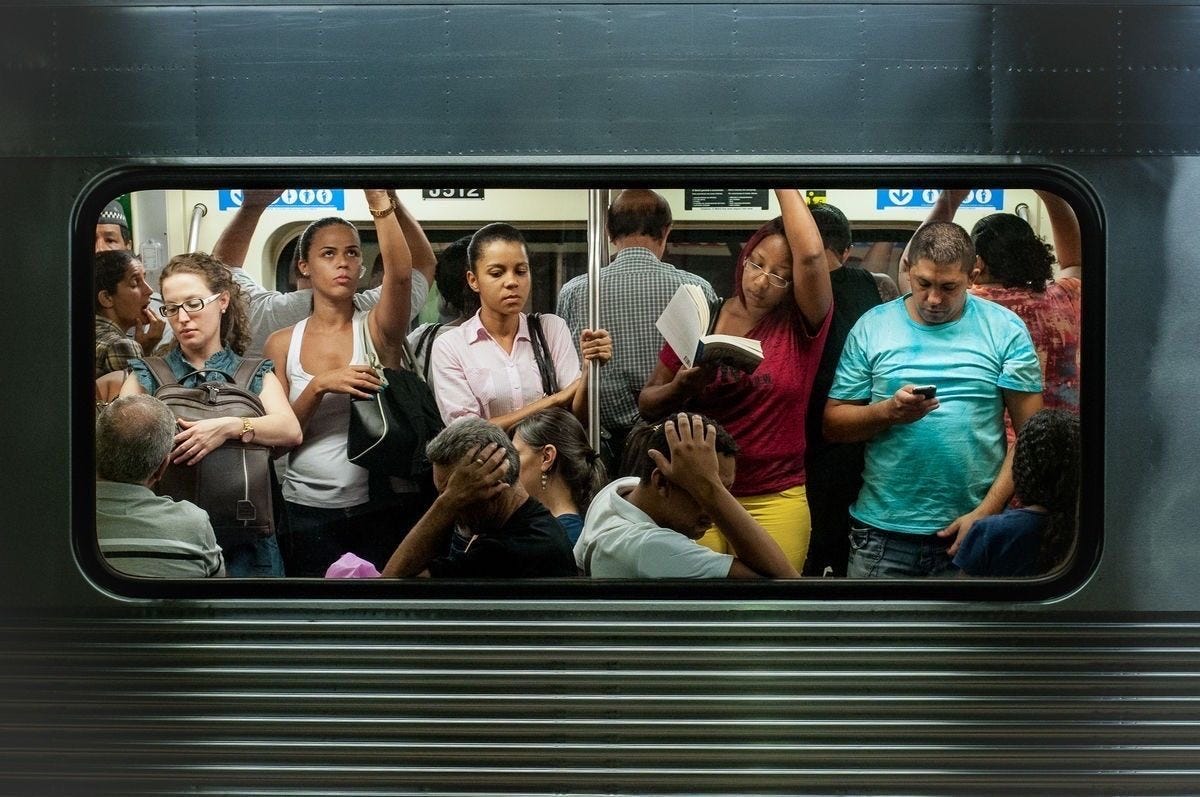
It seems we are doomed to have a digital viralata complex, importing trends and consumer habits that don’t fit our reality. Books have become just props on our Instagram profiles. We can’t preach to a person who spent three hours on public transportation and eight hours at work, that reading Dostoevsky is better than scrolling on social media, when all they need is to avoid cognitive exertion for some hours before bed.
We are so back, to the main question: If everything is performative, what is not?
Public exhaustion.
Reading in Brazil is considered performative because time itself has become the ultimate luxury. This structural problem is cruel, and makes us think that this kind of alienation is well-deserved, when in fact it fuels functional illiteracy and a lack of critical thinking and creativity.
English isn’t my first language, i accept corrections but - please, be kind!
Writing this wasn’t easy, because i recognize the performance while actively participating in it (and I LOVE SM reading).

I want to know in the comments what’s your perspective, share with me!
Thanks for reading, seeya!
I found your analysis really interesting! It makes sense that the habit of reading can become performative when the structural context of the country doesn’t allow most people the time or resources to read regularly. It’s a reminder that not everything that seems simple is accessible to everyone, and that culture and privilege often go hand in hand. It also made me reflect on how much our posts can sometimes be more about image than actual practice.